

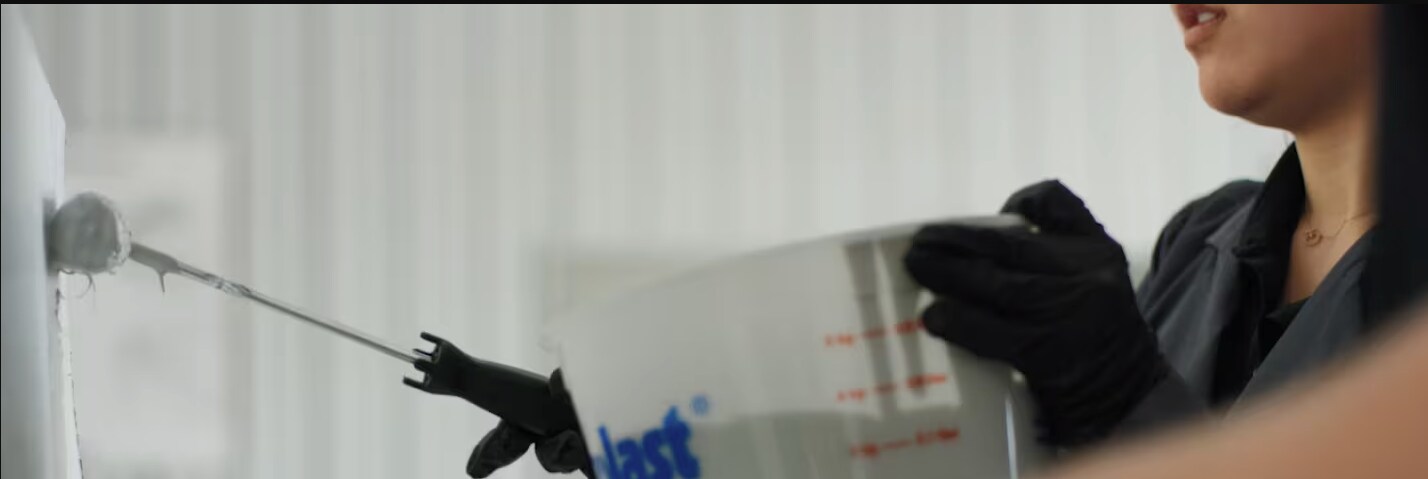
The Evolution of Fluid-Applied Membranes
Almost 175 years ago, the low-slope roofing industry began with the construction of roof membranes using a field-applied liquid component and a reinforcing fabric. Built-up roofs using coal tar or bitumen were the standard for well over a century; however, in the last 50 years, factory-produced membranes grew in popularity and also secured a place as a dominant method of roofing application. During recent years, fluid-applied materials, albeit without the use of a kettle, have been filling a need for difficult applications where prefabricated membranes are not the easiest solution.
Fluid-applied materials used as flashing solutions have led to the resurgence of the concept. Fluid-applied membranes improved the continuity from the roofing membrane to the vertical termination. The development of high performance materials to be used at these critical junctions is a major advancement for roofing manufacturers and applicators alike. Based on the reliable performance of the flashing materials, professionals are now beginning to use them for complete roof systems.
Modern fluid-applied membranes are one of the fastest growing sectors of the roofing market. Although they maintain the field-constructed concept of the past, that is where the similarities end. The liquid and reinforcement components that are utilized today are highly engineered. Whether it is the base polymers, the types of curing mechanisms, or the versatility in design, this is not your grandfather's roofing.
History of PMMA
One of the predominant chemistries in Europe and North America is polymethyl methacrylate, commonly referred to as PMMA. PMMA is a widely used polymer known for its toughness and clarity. Applications for PMMA range from bone cement and dental fillings to countertops, road markings, and aquarium glass.
The uses for PMMA are quite extensive, but a commonality lies in the intended exposure to harsh in-service conditions. The ability to handle abrasion and its inherent resistance to degradation from ultraviolet (UV) radiation makes PMMA a solid choice for rugged applications such as roofing and waterproofing.
The use of PMMA in roofing and waterproofing has a surprisingly long history. Even though it is often categorized as new technology, it has been used in roofing for over 30 years in Europe and 15 years in the United States.
What is PMMA?
The PMMA polymer chain has a unique feature that makes it ideal for fluid-applied field applications. The end of the polymer chain is always available for additional links. So, when catalyzed liquid is applied over a cured membrane, such as a lap or tie-in, the polymer chain can continue from the cured membrane into the membrane that is forming. The polymer chain creates a chemical bond between layers of material.
A chemical bond is much stronger than a simple adhesion bond, resulting in more robust attachment than is typically obtainable with adhesives. This bonding can be formed on day one or at year ten when an additional penetration through the system is needed.
PMMA polymerization reaction can occur at temperatures below freezing. Most manufacturers will allow application down to 23° F (-5° C), which can be a distinct advantage in colder climates. Materials should be kept in conditioned storage to maintain the proper viscosity and aid in the dispersion of the peroxide. Proper dispersion of the initiator is important to the uniform curing of the membrane. Manufacturers typically recommend that the initiator be stirred into the material for at least two minutes to ensure full dispersion.
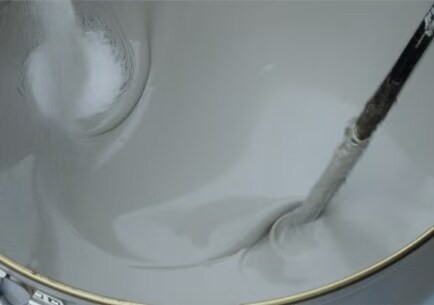
The polymerization of PMMA usually takes less than 45 minutes, depending on the temperature, and the membrane is typically resistant to rainwater wash off in approximately 15 minutes. For many roofers, the peace of mind that comes from knowing that the material is fully cured when they go home for the night is valuable.
In addition to roofing, PMMA can be used for balcony and parking deck surfacing and waterproofing. Its ability to withstand the rigors of pedestrian and vehicular traffic is well-known in Europe and makes PMMA a premium choice for many business owners. Inherent toughness makes PMMA a viable option for commercial roofing.
Conclusion
The roofing industry deals with long life cycles, which inevitably affect the speed of technology evolution and acceptance. Combine that with the influence of wisdom and some hard learned lessons, and the resistance to change is understandable.
PMMA has established itself over the last three decades as a leader in fluid-applied technology. UV resistance, durability, and fast cure make it a great choice for roofing and waterproofing applications. It seems that PMMA is no longer just a new technology that everyone is watching with a wait-and-see attitude but an exciting advancement in roofing and waterproofing that could be the beginning of a fluid-applied revolution.
