

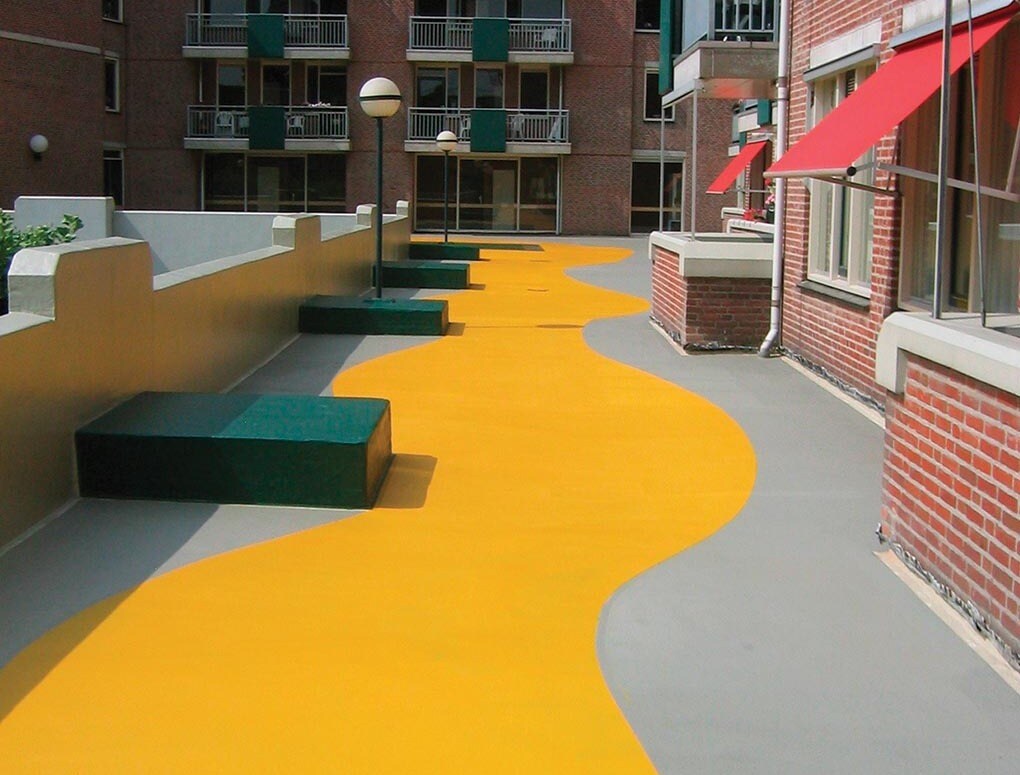
Over the last few decades, the thermoplastic known as polymethyl methacrylate (PMMA) has become a go-to option in the commercial building and roofing sector. A highly durable material, PMMA can effectively protect high-traffic areas, such as parking decks and areas with heavy foot traffic, from localized movement and harsh weather conditions. In addition to these surfaces, PMMA can be used for complex roofing projects and difficult flashing details.
Commercial building professionals aim to design buildings to last and need to understand different materials. Accordingly, it's important to understand the fundamentals of PMMA applications and how to best leverage this innovative product when designing and overseeing roofing projects. Here are the key details to know.
What Is PMMA?
PMMA is a durable resin first developed in the 1930s also known as Plexiglass. In the 1970s, scientists developed a new PMMA formula that wouldn't be rigid upon curing. This innovation allowed for resilience and flexibility, making it suitable for a wide range of uses as a building material.
Today, PMMA applications offer several special traits. The material lasts a long time, bends without breaking, and doesn't react with many chemicals. In addition, it adheres to many different surfaces—such as steel, concrete, and plastics—and performs well in extreme outdoor environments, including cold winters and hot summers.
PMMA also offers long-term reliability; structures that include PMMA-based solutions are generally less likely to develop problems. This helps reduce the need for repair and maintenance over the life of the PMMA installation.
The material is also easy to work with. Applied as a liquid, the completed membrane is continuous without seams. PMMA only needs a short time to fully dry, allowing building construction or traffic to continue soon after installation.
PMMA Enhances Traffic Coatings
Durable and strong, PMMA applications are a safe and reliable choice for high-traffic areas.
Parking Deck Structures and Plaza Decks
High-traffic surfaces on commercial buildings, such as rooftop parking garages and plaza decks, endure ongoing mechanical and environmental forces. This is especially true for structures located in regions that experience drastic seasonal changes. Accordingly, these surfaces need ample protection to keep them safe and in good working order. PMMA-based products, such as Siplast Terapro Waterproofing & Surfacing Systems & Parapro Liquid Roofing System, provide several advantages.
Resistance to wear: PMMA stands up to ongoing foot and vehicle traffic and extreme weather conditions.
Grip: Systems like Terapro exceed ADA regulations for surface grip, making them safer.
Quick installation: PMMA coatings cure quickly, reducing delays and providing practical and financial advantages.
PMMA Application Benefits in Action
Here's an illustrative example: Consider a crowded city plaza deck that sees tremendous daily foot traffic, heavy vehicle loads, and direct sun exposure on a routine basis. Over time, regular asphalt coatings might break under daily use, and polyester or polyurethane coatings may begin to peel, potentially leading to expensive repairs. PMMA is flexible, with high expansion and contraction capability, making it the best option for this demanding setting. Thanks to its ability to cover surfaces without leaving gaps and seams—even on uneven areas—PMMA can also help minimize weak spots that could eventually lead to failures.
PMMA has advantages in northern and coastal areas during winter, which typically bring increased levels of moisture and salt. The material's chemical resistance and flexibility are key to these surfaces' ability to withstand damage.
PMMA Supports Complex Flashing Needs
Flashing plays a key role in construction by stopping water intrusion and protecting important details at penetrations, drains, parapets, and perimeters. However, flashing details can cause problems due to their complex shapes and differential movement. Membrane flashing materials aren't easily installed, which can lead to leaks or the need for frequent repairs.
PMMA offers a solution to these issues by providing a liquid-applied option that can fit each job's specific needs. Because PMMA is installed as a liquid, it can fit around odd shapes and hard-to-reach areas.
PMMA Flashing Characteristics
Siplast Parapro Flashing offers several benefits, including:
Custom fit: The material can accommodate odd-shaped penetrations, tight clearances, and equipment supports, providing comprehensive coverage.
Dual compatibility: Parapro Flashing can be applied to the top surface of the Siplast Paradiene 30 finish ply or between plies of Siplast SBS-modified bitumen roof systems.
Chemical resistance: This durable product can withstand demanding environmental and industrial conditions, including certain chemicals and oils.
Long-lasting protection: PMMA roofing and waterproofing systems are designed to move with the structure and last longer. Liquid application also reduces the potential for failure points, providing much-needed assurance.
PMMA Membrane Characteristics
PMMA-based membranes such as Siplast Parapro Roof Membrane and Terapro Waterproofing Systems are designed for applications where a flame-free, monolithic solution is needed. Key characteristics include:
High-mil thickness: Enhanced product thickness can offer extra protection against leaks and can increase durability.
Cool roof benefits: Light-colored systems reflect sunlight, which helps minimize heat absorption, potentially reducing cooling costs and energy consumption—an eco-friendly benefit.
Durability: PMMA membranes can withstand harsh conditions, such as UV degradation and heavy traffic, while remaining flexible.
The Go-To Choice for Durability and Longevity
A popular option for roofing and waterproofing applications, PMMA applications can be used for many types of construction projects that need a long-term solution to protect against heavy vehicle and pedestrian traffic and harsh weather conditions. PMMA is often selected as the material of choice because it provides durability, flexibility, and long service life. This ability to reliably solve a variety of challenging conditions differentiates PMMA from other modern alternatives, making it an outstanding choice for commercial construction needs.
To get more details about PMMA roofing systems, download the Siplast whitepaper on Terapro Waterproofing & Surfacing Systems.
