

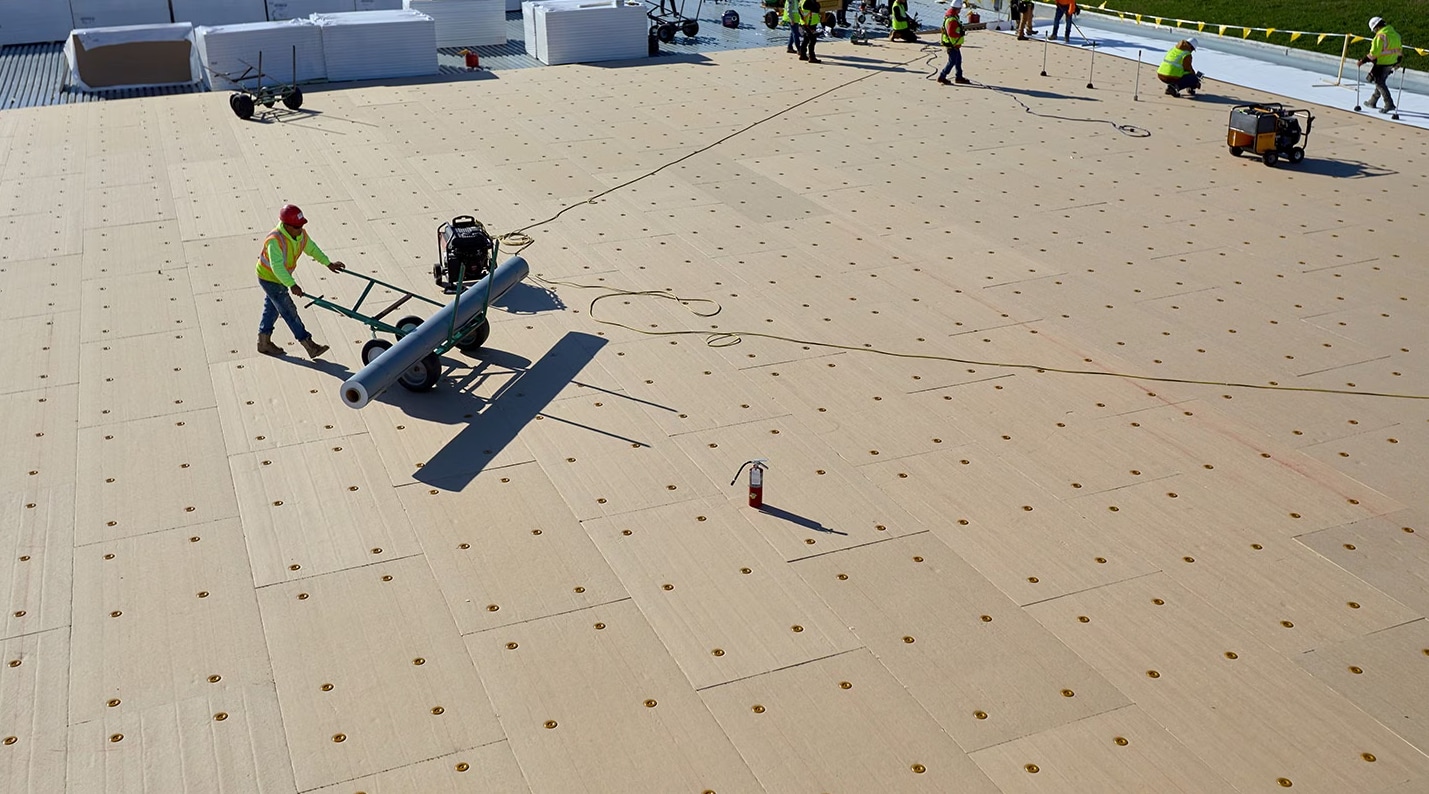
Polyisocyanurate insulation (polyiso) has the highest market share in the roofing industry–approximately 70%. It's been the market leader for decades. Why? Because polyiso has the highest R-value per inch of insulating materials that are commonly used in the roofing market. There are other insulation types that come close, but none that are widely used match the R-5.7 per inch insulating value of polyiso. Polyiso is also widely used because of its other benefits: its availability, material compatibility, impact and fire performance, general durability, relative moisture resistance, and its ability to be attached/secured by various methods. Given its characteristics, there's good reason polyiso insulation is a market leader.
Even with all of polyiso's benefits, there has been a lot of discussion in the roofing industry over the last couple of decades about the effect of temperature on polyiso's R-value. However, proper design of a roof's insulation layer is not about a single characteristic. The proper design of a roof's thermal insulation layer should take into account many additional considerations.
Fasteners used to secure insulation for an adhered roof membrane should be beneath at least one layer of rigid insulation or beneath an adhered cover board
Use at least two layers of rigid insulation, and stagger and offset the board joints
Use an air barrier at or just above the roof deck
Use polyiso insulation that has a low-temperature-stable R-value
Read the full paper, to learn more about how R-value for polyiso is determined, as well as how fastener location, multiple layers of insulation, and air barriers can affect in-service R-value, at the link belowl.
Proper Design of a Roof System's Thermal Insulation Layer
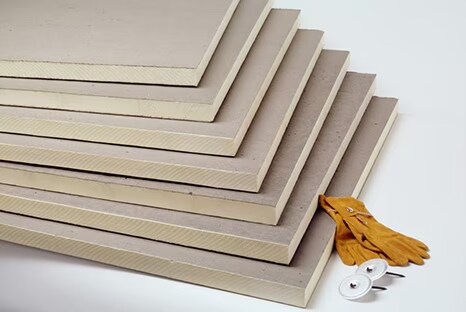
To learn more about Siplast's polyiso product offerings, visit our website.
